Road Safety • Guides
Lane Use Control Signs vs Lane Control Signals (Simple Guide)
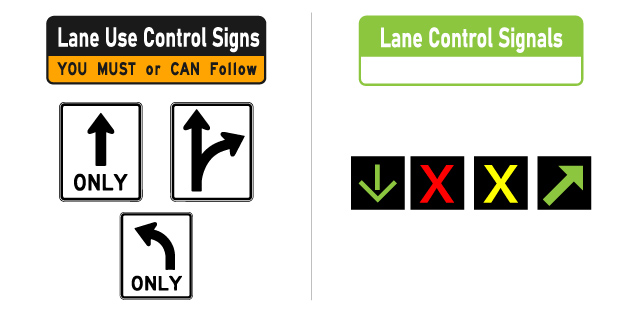
When driving on busy roads, you often see arrows above lanes or on white rectangular signs at intersections.
Some signs tell you:
- You must turn left
- You must go straight
- You can turn or go straight
Many people get confused between:
- Lane Use Control Signs
- Lane Control Signals
They sound similar, but they are not the same.
Let’s explain it in very simple words.
🔵 What Are Lane Use Control Signs?
Lane Use Control Signs are traffic signs that tell drivers which direction they can or must go from a specific lane.
👉 These signs are usually rectangular or square with black arrows or text on a white background.
They control lane movement by using arrows to guide traffic.
These signs either:
- Allow certain movements — Drivers are permitted to go in the directions shown.
- Require a specific movement — Drivers must follow the direction shown and cannot choose another option.
👉 If a direction is shown, you can go that way or must go that way depending on the sign.
👉 If a direction is not shown, you are not allowed to travel in that direction.
In simple words, these signs control how vehicles use a lane by clearly showing permitted or mandatory movements.
✅ Signs That Come Under Lane Use Control (R3 Series)
All of these belong to the same category:
R3-5 Series – Turn Only Signs

- Left Turn Only
- Right Turn Only
- Straight Only
R3-6 Series – Turn + Straight Signs

- Left Turn & Straight
- Right Turn & Straight
R3-7 Series – Turn Combinations
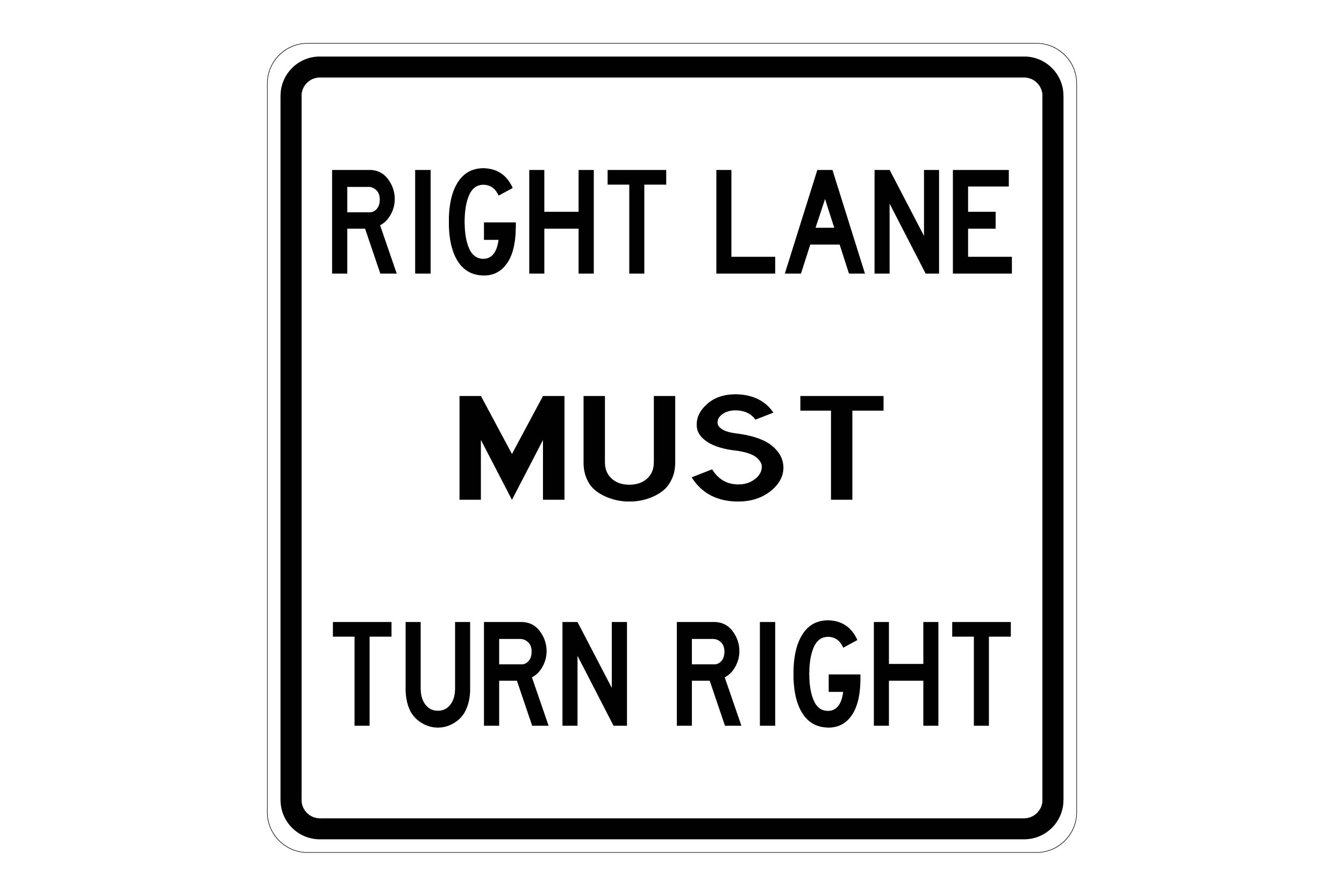
- Left & Right Turn Only
- Other turn combinations
R3-8 & R3-9 Series – Lane Assignment & Special Lane Use Signs

- Multi-lane arrow layouts
- Advanced intersection lane diagrams
- Two-way left turn lane signs
- Center lane control markings
🔵 What Are Lane Control Signals?
Lane Control Signals are different.
These are electronic signals placed above highway lanes.
They are used to show whether a lane is:
- 🟢 Open
- 🔴 Closed
- 🟡 Changing direction
They are commonly used on:
- Highways
- Bridges
- Reversible lanes
- Rush hour traffic systems
These are dynamic signals, not printed regulatory signs.
🚦 Very Simple Difference
✅ Lane Use Control Signs (R3 Series)
- White rectangular signs
- Show arrows
- Tell you allowed directions
- Used at intersections
👉 They control how you use the lane.
✅ Lane Control Signals
- Electronic overhead signals
- Red X or Green Arrow
- Show if a lane is open or closed
👉 They control whether the lane is available.
🧠 Final Easy Explanation
Lane Use Control = What direction can I go or what direction must I follow?
Lane Control Signal = Is this lane open or closed?
FAQ (Frequently Asked Questions)
1. What are Lane Use Control Signs?
They are regulatory traffic signs that show drivers which direction they can or must go from a specific lane.
2. Which signs come under the R3 Series?
R3-5, R3-6, R3-7, R3-8, and R3-9 series signs are part of the Lane Use Control category under MUTCD standards.
3. What is the difference between Lane Use Control and Lane Control Signals?
Lane Use Control signs are static regulatory signs with arrows. Lane Control Signals are electronic overhead signals that show if a lane is open or closed.
4. Are R3 Series signs mandatory?
Yes. If a sign shows a required movement, drivers must follow the direction indicated by the arrows.
5. Where are Lane Use Control Signs usually placed?
They are placed at intersections, on multi-lane roads, and before traffic signals to control lane movements clearly.
6. Do Lane Use Control Signs allow choice?
Some signs allow multiple permitted movements, but drivers must choose only from the directions shown on the sign.