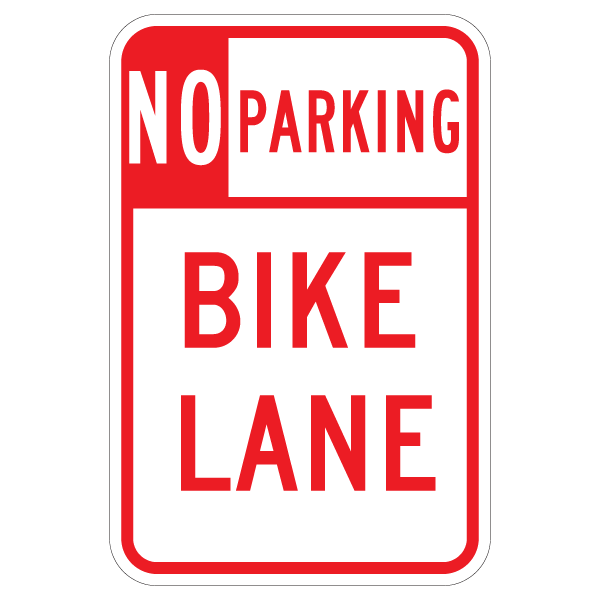
R7-9 No Parking Bike Lane MUTCD Compliant Vector

M.Ibrahim — Senior Traffic Sign Designer
Design Process and Preview
The R7-9 No Parking Bike Lane Sign is designed using a clean multi-layer vector setup that keeps the artwork accurate, organized, and ready for professional print production. Each layer is separated carefully to maintain proper spacing, alignment, and balanced proportions throughout the design.
Layer Structure Breakdown:
1. Inset Layer: A 12 × 18 inch sign shape with 1.5 inch rounded corners and a 0.375 inch inset spacing creates the main layout structure of the sign. This layer also includes the white background area that helps maintain safe margins and clean internal spacing.
2. Background Layer: A solid red background panel with a 0.375 inch border thickness spacing forms the primary regulatory field and gives the sign strong visual contrast and visibility.
3. Bottom Background Layer: A white background section positioned at the lower part of the sign, designed specifically for the “BIKE LANE” text area to improve readability and separation.
4. Top Background Layer: A white background section placed at the top portion of the sign to clearly organize and highlight the “NO PARKING” text area.
5. Typography Layer: All text elements including “NO PARKING” and “BIKE LANE” are aligned carefully with balanced spacing and clean positioning to maintain a professional MUTCD-style appearance and maximum readability.
6. Alignment & Guide Layer: Guide lines and alignment structures are used throughout the design process to ensure perfect centering, equal spacing, and consistent proportions across the entire sign layout.
This layered setup keeps the R7-9 No Parking Bike Lane Sign clean, scalable, and production-ready for export in EPS, AI, PDF, SVG, PNG, and JPG formats.
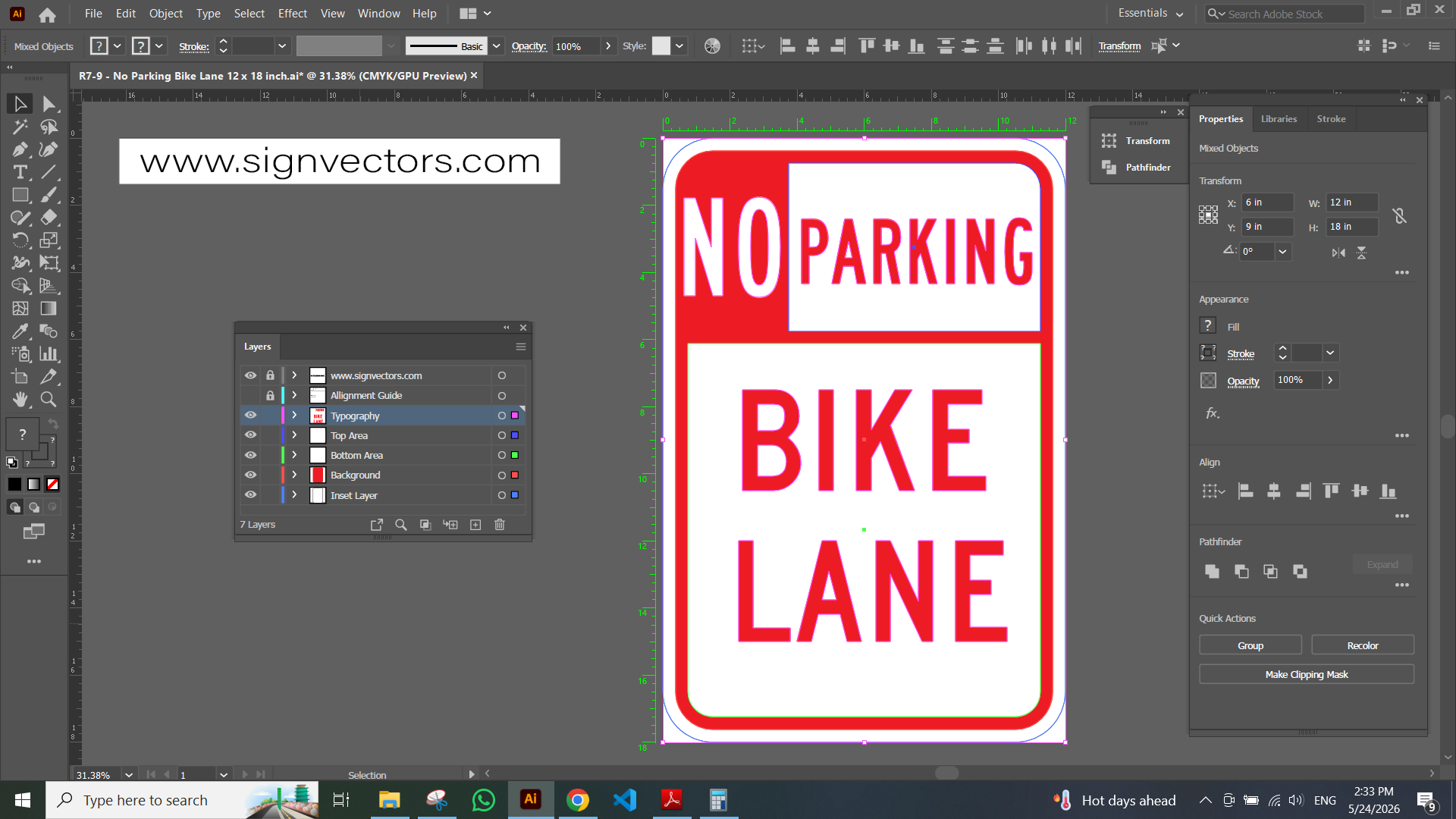 Adobe Illustrator working file — layers, vector paths, CMYK values visible
- ✓ Designed according to MUTCD Section 2B dimension standards.
- ✓ FHWA Series C and B
- ✓ CMYK color mode (print-safe)
- ✓ 300 DPI — no pixelation at any print size
- ✓ All shapes expanded & optimized
- ✓ Tested in Illustrator, CorelDRAW & AutoCAD
Technical Specifications
| Sign Code | R7-9 |
| Standard | MUTCD — Regulatory Signs (Section 2B) |
| Available Sizes | 12 × 18 in (print standard) | 2000 × 2000 px (digital use) |
| Print Package | CMYK, 12 × 18 in, EPS / PDF / AI (print-ready vector files) |
| Digital Package | RGB, 2000 × 2000 px, SVG / EPS / PNG / JPG (web & screen optimized) |
| Color Mode | CMYK (print) / RGB (digital) |
| Resolution | 300 DPI (print export) / 2000 × 2000 px (web export) |
| Text | Converted to outlines for full compatibility across all software |
| Shapes | Fully expanded, scalable vector paths |
| Software Compatibility | Adobe Illustrator, CorelDRAW, Inkscape, AutoCAD |
What Does the R7-9 No Parking Bike Lane Sign Mean?
The R7-9 No Parking Bike Lane Sign means that vehicles are not allowed to park or stop in the bike lane. This area is strictly reserved for bicycles so cyclists can move safely without any blockage.
This sign is usually placed along roads that have a dedicated bike lane. It clearly tells drivers to keep this space empty at all times, even for short stops or loading.
By keeping the bike lane free from parked vehicles, this sign helps improve cyclist safety, reduces confusion on the road, and supports smoother traffic flow for everyone.
Frequently Asked Questions
What is the R7-9 No Parking Bike Lane Sign?
This is a regulatory sign that shows parking and stopping are not allowed in the bike lane. It keeps the lane clear so cyclists can travel safely without any obstruction.
What does the R7-9 sign mean in traffic control?
It means the bike lane must remain free of parked or stopped vehicles at all times. Drivers must not block this lane under any condition.
Why is the No Parking Bike Lane sign important?
It improves cyclist safety by preventing vehicles from blocking the bike lane. It also helps maintain smooth traffic flow and reduces road conflicts.
Where is this sign usually installed?
It is typically placed along roads that have dedicated bike lanes, especially in urban areas, near intersections, or along busy streets.
Is this design MUTCD compliant?
Yes, the design follows MUTCD guidelines with proper layout, spacing, and clear regulatory messaging for road safety use.
Can I use this sign for professional projects?
Yes, it can be used for traffic control designs, road safety planning, engineering projects, and professional signage applications.